

Build Strong Coding Habits
Professional developers don’t just write good code, they also develop habits that save time, reduce frustration, and improve debugging.
Build Strong Coding Habits Read Post »
Topics related to creating instructions for a computer to solve a problem or carry out a task, such as syntax and semantics. Learning key programming concepts improves your logic and problem-solving skills. It also helps you better understand how coding works.
Professional developers don’t just write good code, they also develop habits that save time, reduce frustration, and improve debugging.
Build Strong Coding Habits Read Post »

Learning how to convert between numeral systems such as decimal and binary deepens an understanding of how computers interpret information.
Decimal and Binary: Numeral System Conversions Read Post »

Computers use binary because electronic circuits can reliably detect two electrical states, such as low voltage and high voltage.
Bits and Binary: The Language of Computers Read Post »

The hexadecimal (base-16) numeral system uses both digits and letters; the digits 0–9 represent values 0 to 9, and then letters A–F represent values from 10 to 15.
Hexadecimal Numeral System (Base-16) Read Post »

The decimal (base-10) numeral system uses the digits 0–9 to represent values. It is the most widely used numbering system in everyday life and is the standard system for counting and arithmetic in many countries.
Decimal Numeral System (Base-10) Read Post »

Understanding binary (base-2) is essential for programmers because everything we code ultimately compiles down to zeroes and ones.
Binary Numeral System (Base-2) Read Post »

Numeral systems (number systems) represent values and quantities using a specific set of symbols and rules for how numbers are counted, combined, and calculated.
Numeral Systems and Data Representation Read Post »

A truth table is a complete map of how a logical expression evaluates for every possible situation.
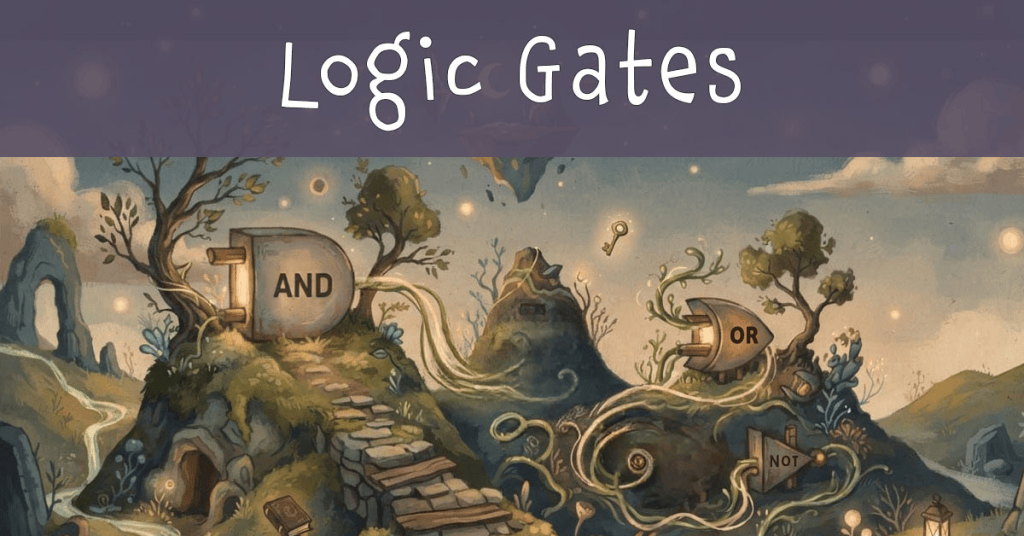
Logic gates allow computer processors to perform logical operations on binary values. Understanding logic gates helps explain how software ultimately executes as electrical signals inside a computer.

Memory is a hierarchy of tradeoffs between speed, size, and cost. Generally, the closer to the CPU, the faster, but also the smaller and more expensive.

Making one small code change at a time and testing it immediately can enhance understanding and simplify debugging. This method helps identify errors efficiently, reduces frustration, and builds problem-solving skills.
Effective Coding and Debugging: One Step at a Time Read Post »

Big-endian and little-endian describe the byte order used in computer memory for multi-byte data types. Different systems must agree on byte order to exchange data correctly, or convert formats to avoid misinterpretation.
Big-Endian and Little-Endian Byte Order Read Post »